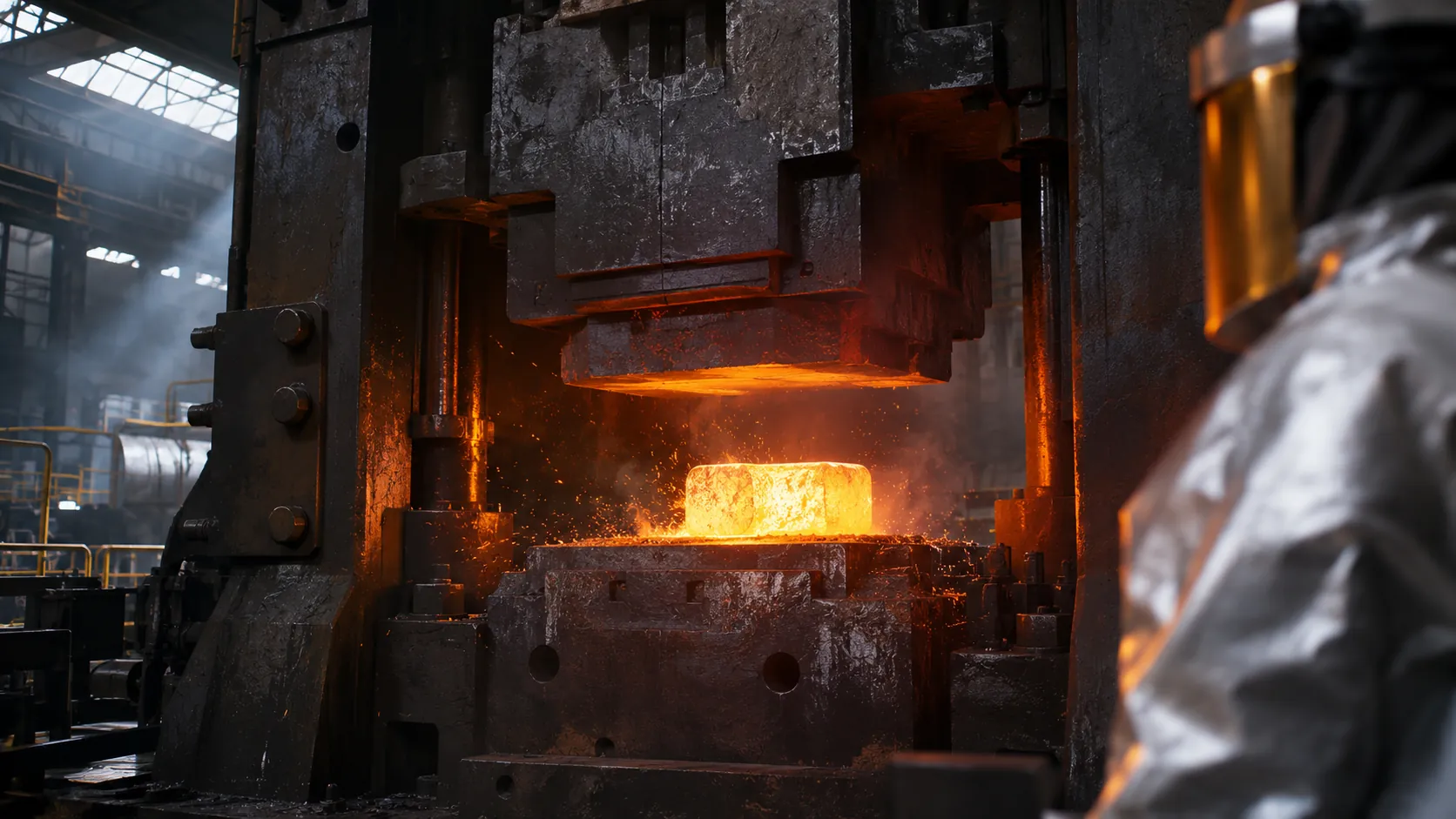
Load-bearing parts
are forged here.
Closed-die hot forging, CNC machining and heat treatment for automotive, heavy vehicles, energy and construction equipment. From 0.4 kg to 180 kg, under one roof.
A part’s journey · 3D
01 / 05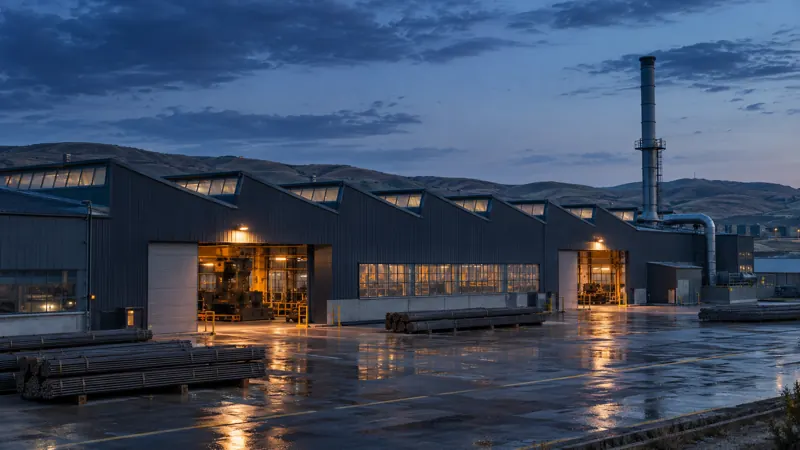
OP 10 · Cutting · 20 °C
First, a cold bar.
Every part starts as a billet cut from a steel bar with a known heat number. This number stays with the part throughout its life.
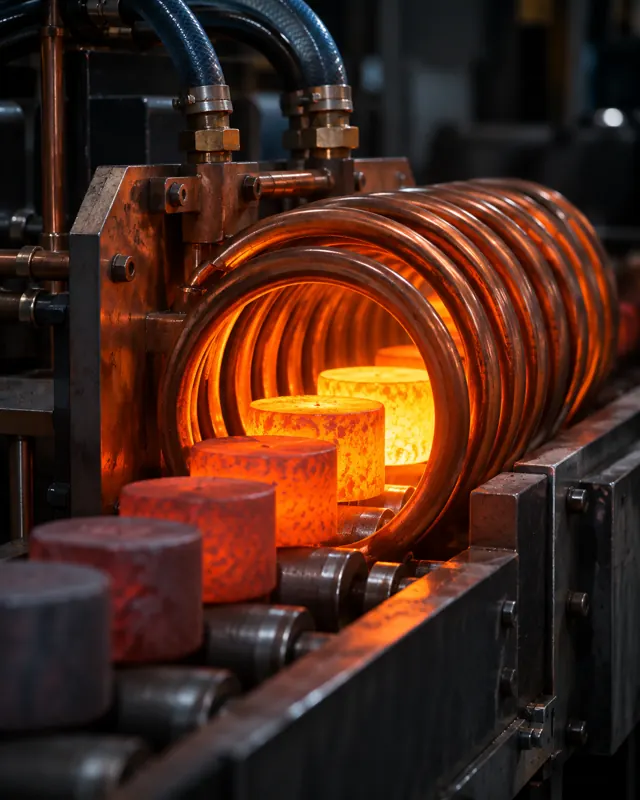
OP 20 · Heating · 1250 °C
1250 °C in 90 seconds.
The induction coil heats the billet from within. When the colour turns from cherry red to straw yellow, the steel is ready to be shaped.
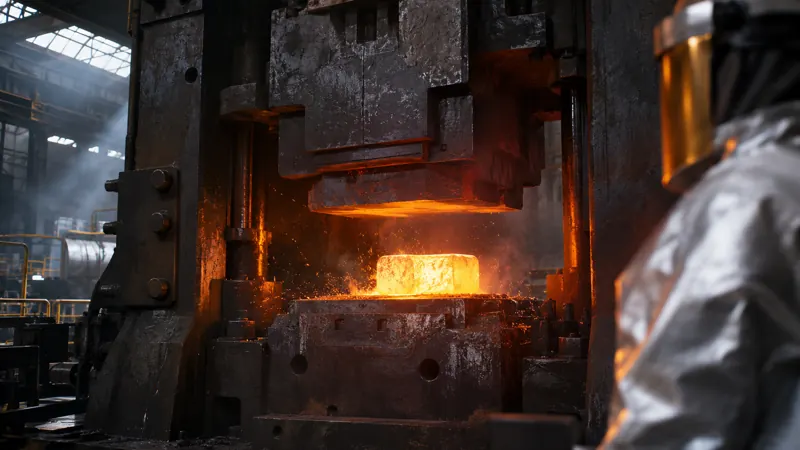
OP 30 · Forging · 1200 °C
One stroke, 4,000 tonnes.
The closed die fills every corner with metal. The material’s grain flow follows the shape of the part and remains uncut.
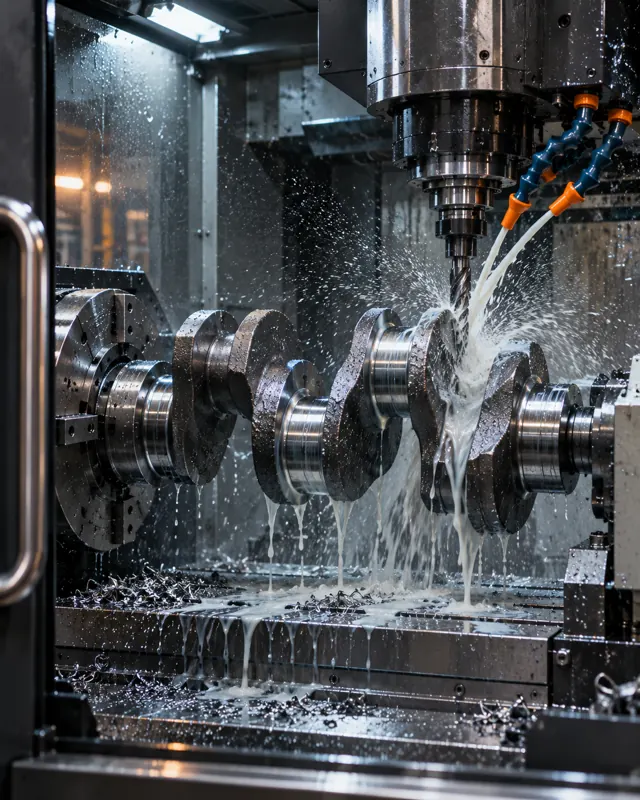
OP 60 · Exploded view · 20 °C
Every component measured.
The crankshaft separates into journals, webs and counterweights. Every machined surface is checked against the drawing tolerances.
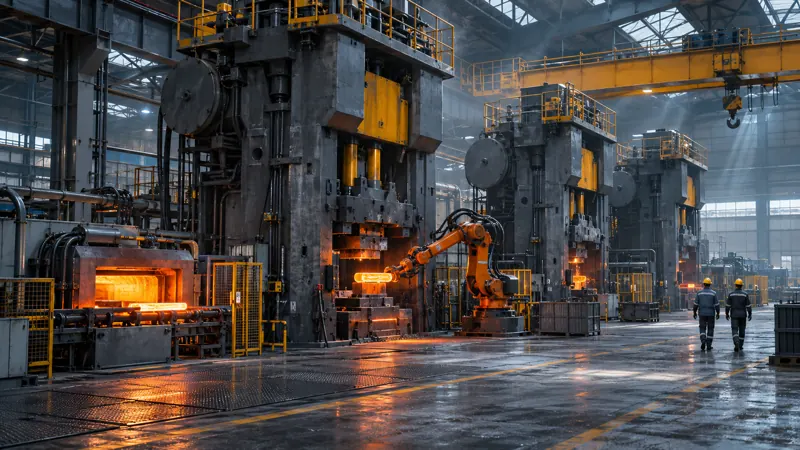
OP 80 · Factory · 20 °C
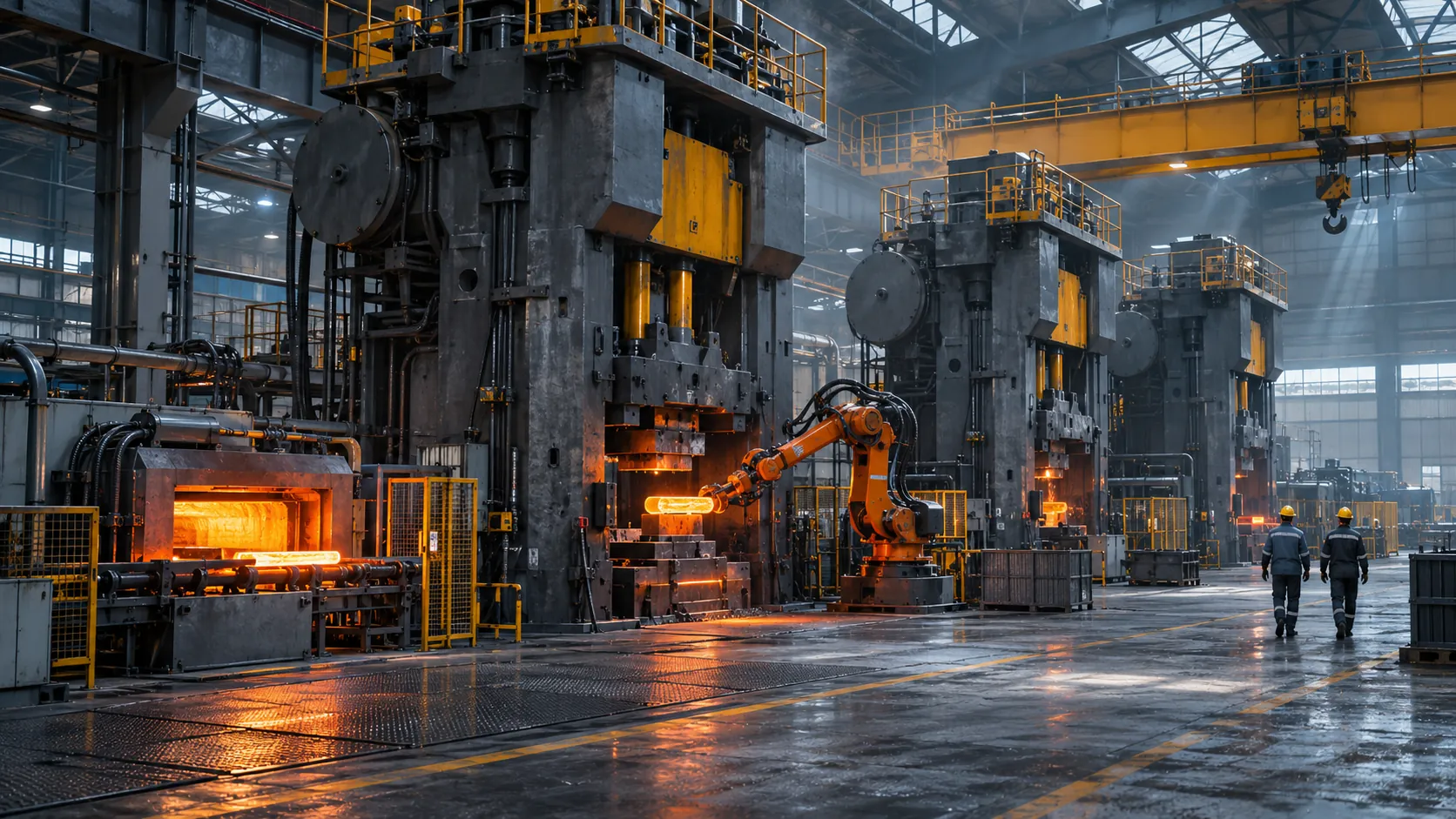
Seven lines, one roof.
Forging, heat treatment and machining take place in the same factory. Parts stay on site throughout production.
Capacity in engineering units
A part’s
route
Nine operations from bar to dispatch. Every part starts with this route card and is tracked under the same number. Hover over the rows: the temperature scale on the left heats up with the part.
| Op. | Operation | Temperature | Equipment | Duration |
|---|---|---|---|---|
| OP 10 | Cutting | 20 °C | Band saw and cold shear | 6 sec |
| OP 20 | Heating | 1 250 °C | Induction heater, 1,200 kW | 90 sec |
| OP 30 | Forging | 1 200 °C | 4,000 t closed-die press, robotic | 14 sec |
| OP 40 | Trimming | 1 050 °C | Trimming press, hot sizing | 8 sec |
| OP 50 | Heat treatment | 850 °C | Continuous furnace, water/polymer quenching | 4 hr |
| OP 60 | Machining | 20 °C | CNC turning and milling centres | 12 min |
| OP 70 | Inspection | 20 °C | CMM, MPI, ultrasonic, hardness | %100 |
| OP 80 | Dispatch | 20 °C | Batch label, traceability record | — |
What we forge
Parts made to drawing for four sectors. No standard catalogue products: each starts with a customer’s drawing.
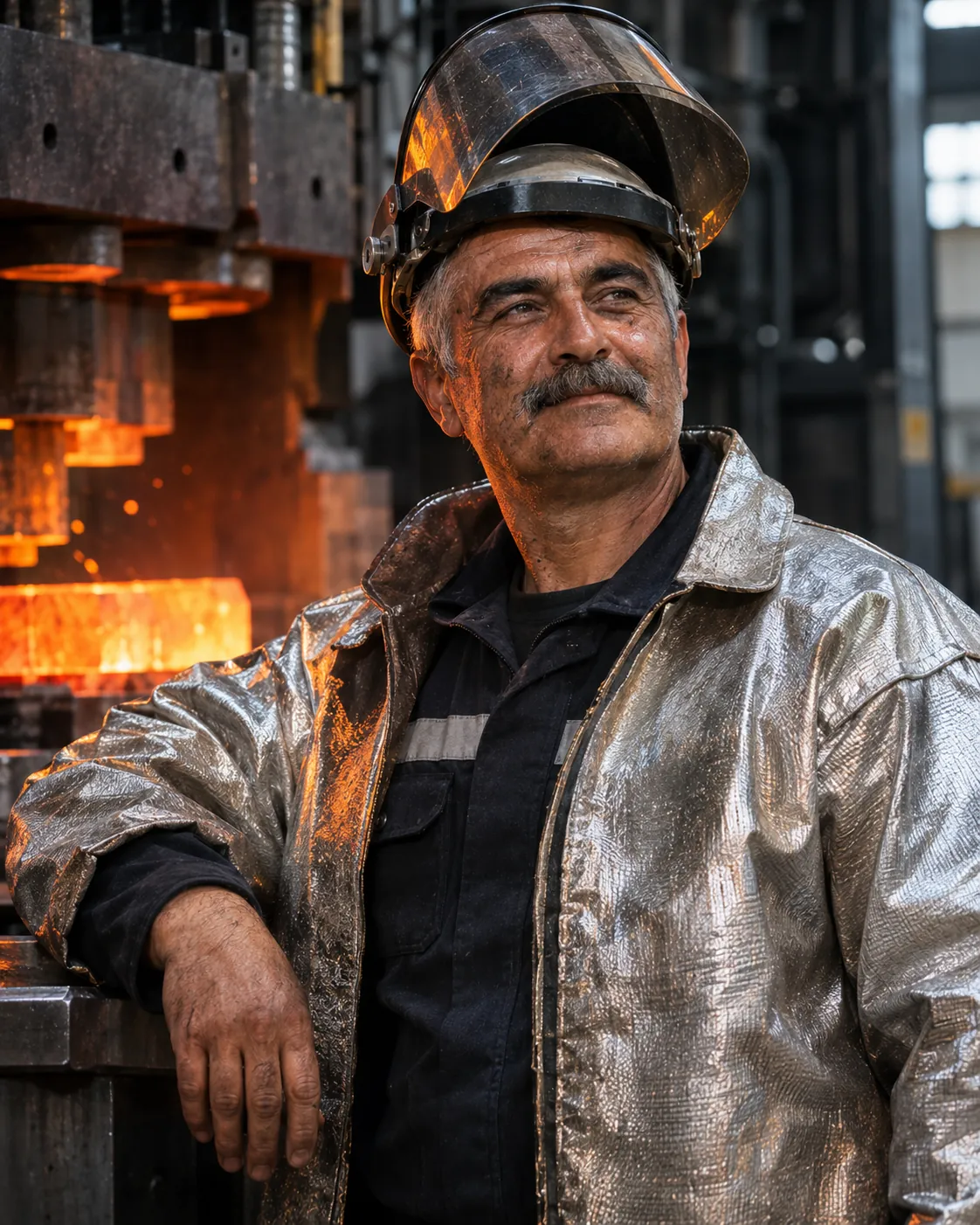
“You can hear a well-forged part. The press strikes once, with a solid sound. Without that sound, the part is not right.”
Press operator, 31 years · Shift B
The proof
is documented
The four documents European buyers ask for first, on the first page.
Valid until: 00.00.2028
Valid until: 00.00.2028
Valid until: 00.00.2027
Valid until: 00.00.2027
Flanges and valve bodies
Share of shipments, 2025
Of production,
86%
goes abroad
Germany is the largest market. Shipping from Manisa to Europe takes 4–6 days by road and 9–12 days by sea from İzmir Port.
- Germany%34
- Italy%12
- France%9
- Poland%7
- Czechia%6
- Sweden%5
- USA%4
- 24 other countries%9
- Türkiye%14
Sustainability
Target: reduce carbon emissions per tonne by 40% by 2030.
Rooftop solar power, 98% of flash and swarf returned to the steelworks, and induction heating. Figures are measured in the annual report.
Targets and measurements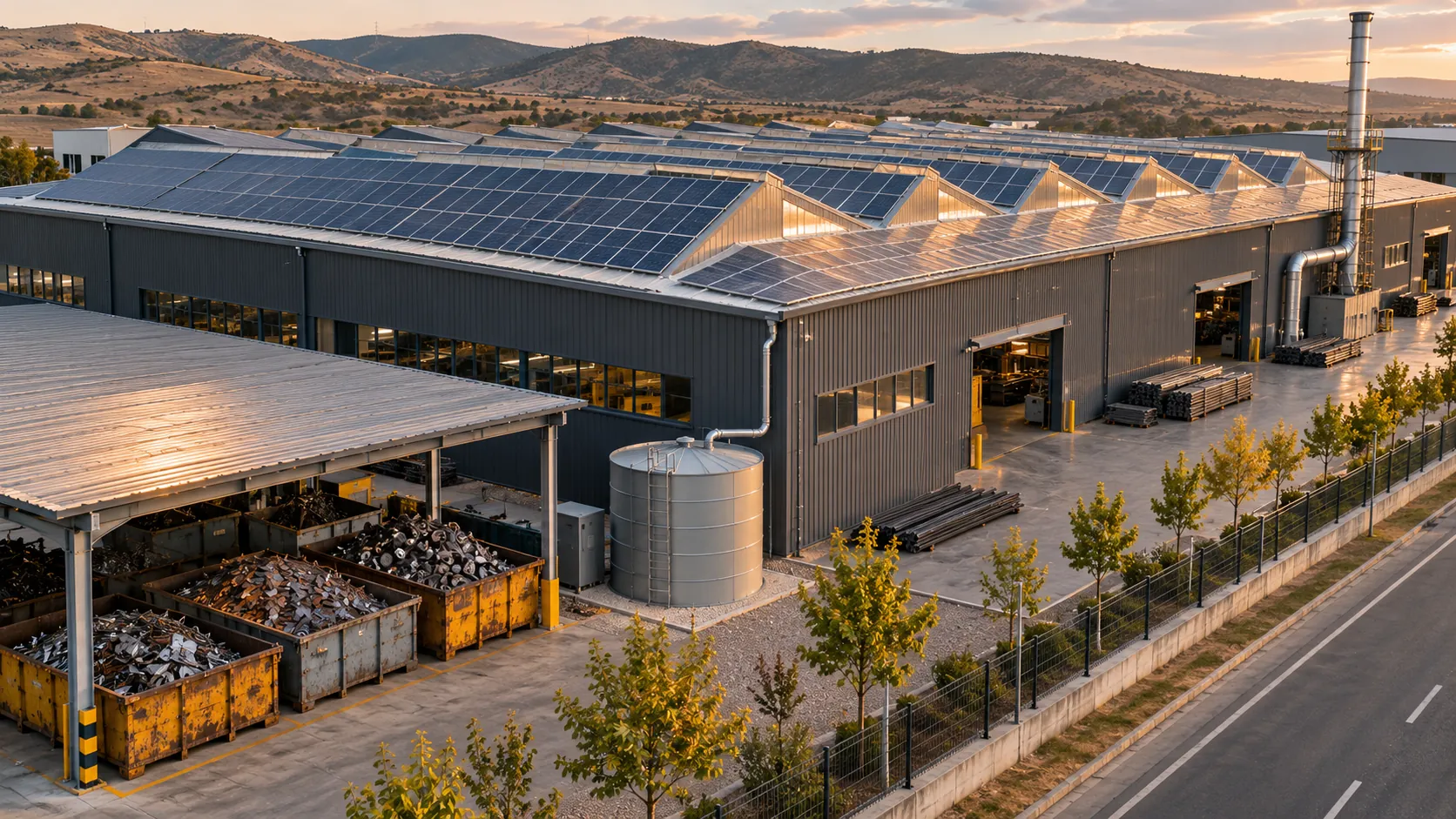
Next step
Send your drawing.Feasibility review in 48 hours →
A STEP, IGES or PDF drawing, annual volume and material are all we need. An engineer responds, rather than a sales representative.